Sunday, January 15, 2012

Polar Alignment Scope

My new mount (Celestron CG-5) is nice and light, but it didn't come with a polar alignment scope.  Basically it's a telescope that helps you align the axis with the NCP (North Celestial Pole) rather than Polaris (the north star).  Polaris swings around in a circle each night and with this you can aim at the actual NCP and get better alignment.  Sure I'd like an autoguider, but polar alignment is the first step.

I ordered it a few weeks ago and because Amazon has the product listed wrong (without mentioning whether it's a CG-4 or CG-5 scope) I received the wrong one.  Called High Point Scientific and they graciously shipped me the right one and a label to ship the wrong one back.  Fast forward to this afternoon and you'd find me out in the backyard attempting to get it aligned properly.  I have a suspicion that since it was such a booger to get right the last mount I had wasn't aligned correctly.  Calibration is the name of the game in telescope mounts, so I spend about 2 hours learning everything I could about polar scopes.  I took mine apart (due to screwing the alignment screw in too far and having it drop into the scope itself).  I discovered that the focus on the star schematic is to some degree in line with focusing on something fairly distant.  I don't know if you've ever tried it, but focusing on something tall at like 45° is pretty hard unless you have an Empire State Building laying around.

Anyway - I finally got it aligned (3 screws w/ teeny allen heads ) and now it stays true whether the scope holder is on the left or right (and all points in between).  Doesn't mean I'll always get good alignment, but at least I can't blame the polar scope.

Clear Skies :)

Saturday, January 7, 2012

Sword of Orion

Last night was my first time using the new scope with the camera (and didn't have the EP protector between the camera and EP adapter).  I'm still working on the other pics, but I had to post this one.  The Sword of Orion contains Orion's Nebula.  This is basically the same as the pic on the last post only much closer and a stacked version of 6 shots.  I did 20 second exposures at 1600 (using the scope as a lens, so no f stop).  I was in the front yard with tons of lights all around me, so I was pretty blown away to get this good of a shot.

Sword of Orion

Betelgeuse (bright star on the left shoulder of Orion)

Moon (about 3 exposures stacked for detail)

Flame Nebula next to Alnitak (the left most star in Orion's Belt)
top is mine and bottom is an example


Thursday, December 29, 2011

New Pic (finally)

Here I am taking shots of Orion again w/ nothing more than a tripod. :)

I don't care as long as I'm out there doing new things and tonight was my first attempt with a digital SLR (new Canon t3).

10 second sub got me this shot - then I went to photoshop to do levels and add labels. It's not much, but at least I didn't leave the cap on this time :)

I took this in my front yard with streetlights all around and using a tiny (4 inches tall) tripod I was holding to keep steady. So with these humble beginnings I still had fun.

Tuesday, December 27, 2011

First Light with Stellarvue


Tonight I finally got a clear evening to try out my new mount / telescope setup. I struggled with alignment basically because the two star method wants to use stars nearer the horizon than I have access to. It's hard to do alignment when you can't see lots of stars in both directions.

Anyway - I had some success with doing a one star alignment and spent some time looking at some crowd pleasers. I started with Polaris (since I was doing polar alignment) and eventually looked at Orion (Betelgeuse and Orion's Nebula). Then once I had the alignment working tried Pleiades and it centered perfectly in my 40mm. Super tight alignment isn't possible the way I'm doing it, but I was reasonably happy with what I could see and the clarity of this scope is insane. Even though things aren't as bright, they are super sharp. Looking at the trapezium is fun because it resolves to huge spaces between the four stars rather than one blob.

I had to try the camera and wasn't all that surprised when I couldn't see anything at all. I'll work through the book once I get the new timer and hopefully start making progress.

In any case I'm glad to be out there again in the cold and my observing chair worked perfectly :)

Thursday, December 8, 2011

Starting over

I just recently sold my XT10 and my Atlas Mount. I liked both of them, but they were pretty big and heavy which kept me from getting them out very often. I'm now trying to get started in Astro-photography. I've ordered a Canon EOS Rebel T3 (12.2 megapixel) DSLR and hopefully this will be a good camera to try Deep Sky imaging with. I'll be attempting to learn the camera with the 70mm refractor I bought to let Harrison use. It's nothing special and pretty light weight, but I think it'll make a decent starter for imaging.

Anyway - hopefully I'll soon have some pics to share - stay tuned.

Friday, April 15, 2011

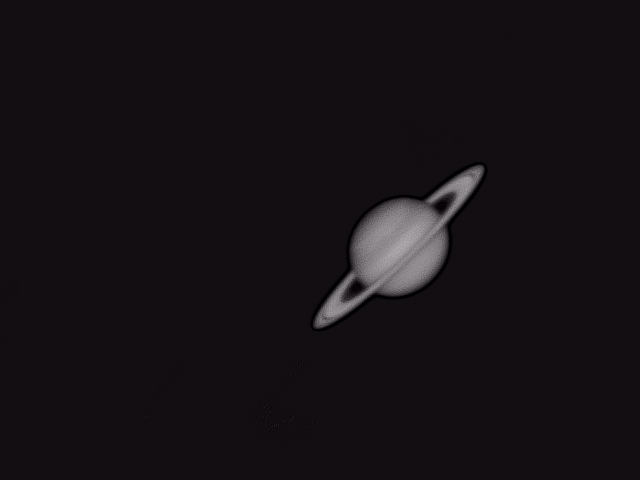
Double Processing - Copernicus Crater and Saturn


So it turns out... AVIStack is supposed to do alignment faster (and better) than Registax, but the wavelet processing on Registax is better at bringing out detail. Here are some shots that have been processed both ways.

I used AVIStack to create the initial image and then Registax to bring out the details. I'm pretty proud of the results :)

Wednesday, April 13, 2011

Copernicus crater on the moon


Here's what I have so far - more shots to come, but this was fairly quick to get processed.

Copernicus is the large one in the bottom left.